Best Korean Skin Treatments for Sensitive Skin
Best Korean Skin Treatments for Sensitive Skin
Have sensitive skin and want to try a Korean dermatology treatment during your trip to Seoul?
Sensitive skin can become red, dry, itchy, burning, or irritated easily, especially after travel, weather changes, or using unfamiliar skincare products.
If your skin is sensitive, the goal should not be to find the strongest treatment. Instead, choose procedures that address your specific concern while minimizing unnecessary irritation and protecting the skin barrier.
What Are the Best Korean Skin Treatments for Sensitive Skin?
The best treatment depends on your skin condition and the concern you want to address.
Dehydrated or dry skin → Gentle hydration treatment
Redness and irritation → Soothing or barrier-focused care
Mild pigmentation → Conservative laser treatment when appropriate
Fine lines + poor skin quality → Selected skin-quality treatments
Enlarged pores → Gentle microneedling or other customized treatment
Skin laxity → Lower-intensity RF or ultrasound treatment when appropriate
A dermatologist should first determine whether your skin is simply sensitive or whether you currently have an irritated or damaged skin barrier.
Best for Dry and Sensitive Skin: Hydrating Treatments
If your skin feels tight, flaky, or uncomfortable, a gentle hydrating treatment may be a better starting point than an aggressive procedure.
These treatments can focus on:
→ Hydration
→ Moisture retention
→ Soothing the skin
→ Temporary improvement in dullness and dryness
→ Best for: Dry, dehydrated, or temporarily stressed skin
This can also be one of the easiest options to fit into a short Korea itinerary because many gentle treatments have little visible downtime.
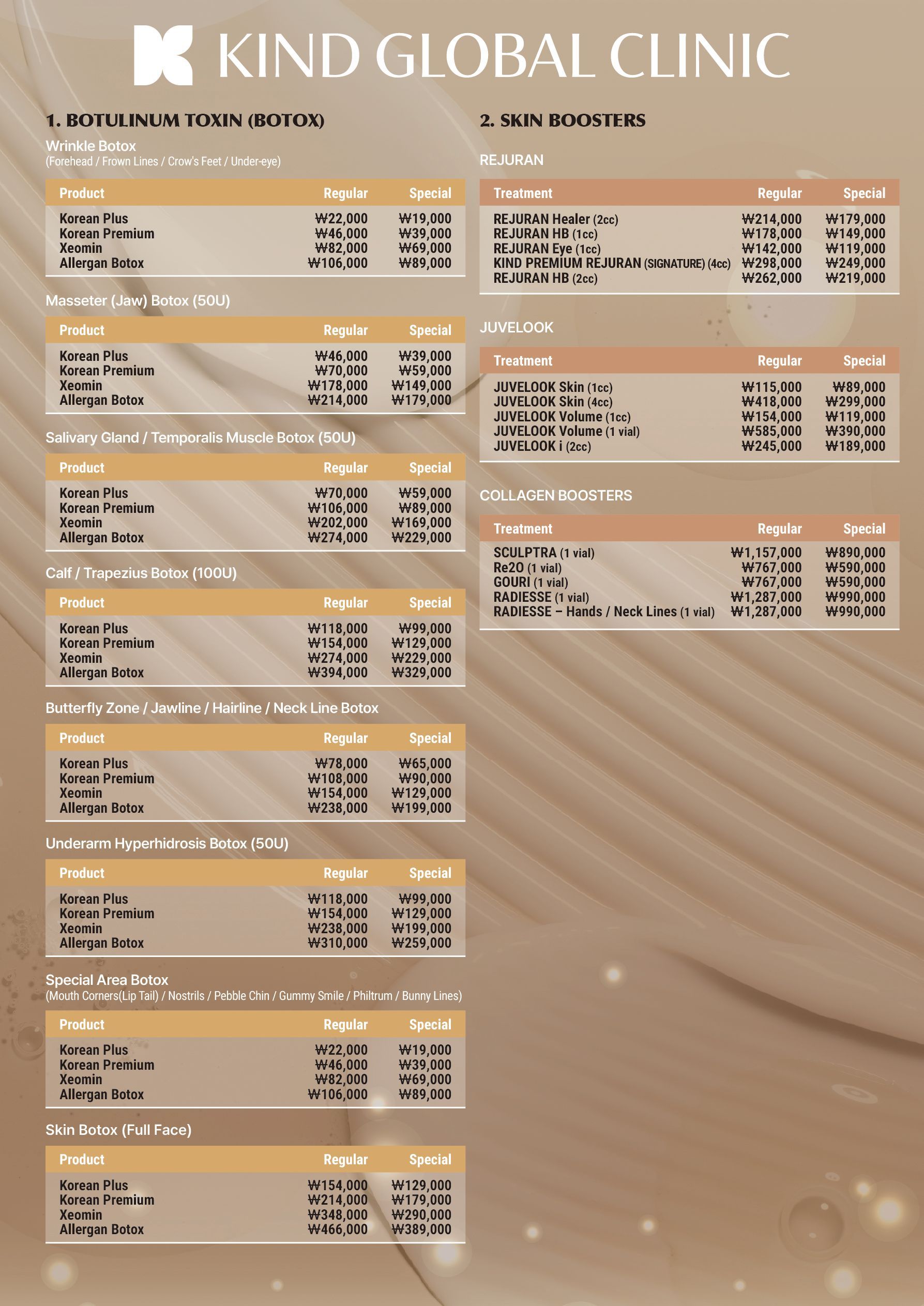
Best for Skin Quality: Rejuran
Rejuran is a popular Korean skin-quality treatment that may be considered when the skin appears thin, dry, rough, or less elastic.
It is generally intended to improve overall skin quality rather than directly treat pigmentation or severe skin laxity.
→ Best for: Thin-looking skin + dryness + texture + elasticity
However, Rejuran involves injections, so temporary redness, swelling, bumps, or bruising can occur.
Sensitive skin does not automatically mean injectable treatment is inappropriate, but your doctor should evaluate whether your skin is calm enough for the procedure.
Best for Hydration and Texture: Juvelook
Juvelook is another treatment available at many Korean clinics for improving aspects of skin quality, texture, and elasticity.
It may be considered when sensitive skin is also experiencing early texture changes or a less smooth appearance.
→ Best for: Texture + elasticity + skin quality
Because it is an injectable treatment, it can still cause temporary irritation or swelling.
If your skin is actively inflamed, tell the doctor before considering an injectable procedure.
Can Laser Treatments Be Used on Sensitive Skin?
Yes, but treatment settings matter.
Some laser procedures can be performed gently, while stronger treatments can cause more heat, redness, peeling, or irritation.
For sensitive skin, a dermatologist may choose:
→ Lower treatment intensity
→ Fewer passes
→ Longer intervals between procedures
→ A treatment focused on a specific concern
More aggressive treatment is not automatically more effective for sensitive skin.
Best for Mild Pigmentation: Conservative Laser Toning
Laser toning may be considered when sensitive skin also has mild pigmentation or uneven skin tone.
A conservative approach can be preferable to aggressively targeting every dark spot.
However, if your skin is currently irritated, your dermatologist may recommend stabilizing the skin first.
→ Best for: Mild pigmentation when the skin is sufficiently calm
If you are prone to pigmentation after irritation, treatment should be customized carefully.
What About Pico Laser?
Pico laser can be used for certain pigmentation concerns, but it should not automatically be chosen simply because it is popular in Korea.
For sensitive skin, the doctor may need to consider:
✓ Skin tone
✓ Pigmentation history
✓ Current redness
✓ Treatment intensity
✓ Risk of post-inflammatory pigmentation
If the main problem is sensitive, irritated skin rather than pigmentation, another treatment may be more appropriate.
Can RF Microneedling Be Used for Sensitive Skin?
RF microneedling can improve pores, acne scars, texture, and some signs of skin aging, but it is more invasive than a simple hydration treatment.
Because needles and RF energy are involved, temporary redness, swelling, and sensitivity are possible.
→ Best for: Sensitive skin that is stable and has a specific texture concern
If your skin is already burning or inflamed, it may be better to address the skin barrier before choosing RF microneedling.
What About RF and Ultrasound Lifting?
RF and ultrasound treatments may be considered when sensitive skin is also experiencing mild loss of firmness.
Because these treatments do not rely on needles or resurfacing in the same way as microneedling or ablative laser procedures, they may be easier for some patients to tolerate.
However, they still create energy-based heating, and sensitive skin may temporarily become warm or red.
→ Best for: Mild laxity + firmness concerns
Your dermatologist should decide the appropriate energy level and treatment area.
Can Chemical Peels Be Used for Sensitive Skin?
Chemical peels require extra caution.
Even a superficial peel can cause stinging, dryness, redness, or peeling, and stronger peels create more significant irritation.
If your skin is already sensitive or your barrier is compromised, a peel may not be the first treatment to choose.
→ Important: Treating sensitive skin too aggressively can create more irritation instead of better-looking skin.
What If My Skin Is Red and Sensitive?
Persistent redness can have different causes, including irritation, inflammation, or vascular conditions.
A standard pigmentation laser may not be the correct treatment.
Before booking, explain whether your skin:
→ Flushes easily
→ Burns or stings
→ Becomes red after skincare
→ Reacts to temperature changes
→ Has a history of irritation after treatments
This gives the dermatologist more useful information when choosing a procedure.
Should I Get a Treatment If My Skin Barrier Is Damaged?
Sometimes the best treatment is no procedure at all—at least temporarily.
If your skin is:
→ Burning
→ Cracked
→ Peeling heavily
→ Extremely dry
→ Recently irritated
a doctor may recommend calming and repairing the skin before performing a cosmetic procedure.
A healthy skin barrier is a better starting point for most aesthetic treatments.
What Skincare Is Best for Sensitive Skin?
A simple routine can often support sensitive skin better than using many active products.
Consider:
✓ Gentle cleanser
✓ Fragrance-free moisturizer
✓ Barrier-supporting ingredients
✓ Daily sunscreen
Depending on your skin, ingredients such as ceramides, glycerin, and other moisturizing agents may help support the skin barrier.
Avoid immediately adding several new Korean skincare products after a procedure.
→ Introduce new products gradually rather than changing your entire routine at once.
How Important Is Sunscreen?
Very important.
Sun exposure can worsen redness and pigmentation and may further irritate recently treated skin.
For sensitive skin:
✓ Choose a sunscreen you tolerate well
✓ Reapply when needed
✓ Use shade when possible
✓ Consider hats or other sun protection during long outdoor activities
This is especially important for international visitors who spend hours sightseeing in Seoul.
How Many Treatments Will I Need?
Sensitive skin does not necessarily require more treatment, but it may benefit from a slower and more conservative approach.
Your dermatologist may recommend fewer or more widely spaced sessions depending on your reaction.
The treatment plan can depend on:
✓ Skin sensitivity
✓ Current barrier condition
✓ Treatment goal
✓ Previous reactions
✓ Skin tone
✓ Individual response
Your skin's tolerance should be part of the treatment plan.
What Is the Downtime?
Downtime depends on the treatment and how sensitive your skin is.
Gentle hydration treatment → Usually little downtime
Conservative laser treatment → Temporary redness or sensitivity may occur
RF/ultrasound lifting → Usually limited downtime, but warmth or tenderness may occur
Skin boosters → Possible bumps, redness, swelling, or bruising
RF microneedling → More noticeable redness and sensitivity are possible
Chemical peel → Dryness, peeling, and irritation may occur
If you are visiting Korea for only a few days, choose a procedure that leaves enough time for your skin to settle.
What Should I Avoid After Treatment?
Depending on the procedure, your clinic may recommend avoiding:
→ Excessive sun exposure
→ Saunas and extreme heat
→ Intense exercise
→ Aggressive exfoliation
→ Strong facial massage
→ Irritating active ingredients
For sensitive skin, avoiding unnecessary irritation is particularly important.
Follow your clinic's specific aftercare instructions instead of immediately returning to your normal active skincare routine.
What Should Foreigners Ask at a Korean Skin Clinic?
Before booking, ask:
✓ Is my skin currently sensitive or actually irritated?
✓ Is my skin barrier healthy enough for this treatment?
✓ Could this procedure make my redness worse?
✓ What treatment intensity will you use?
✓ How much downtime should I expect?
✓ Have you treated patients with similar skin sensitivity?
✓ Can I wear makeup afterward?
✓ Can I go sightseeing the same day?
✓ What skincare should I avoid?
✓ Can I fly shortly after treatment?
These questions are especially useful if you have previously experienced strong reactions to skincare or cosmetic procedures.
Can I Get a Korean Skin Treatment During a Short Trip?
Yes, but sensitive skin benefits from careful scheduling.
1 day → Gentle hydration or soothing treatment
3 days → Selected low-downtime treatments if your skin is stable
Longer stay → More intensive procedures may be easier to plan
If you are trying a treatment for the first time, avoid scheduling it immediately before a major event or international flight.
Which Korean Treatment Is Best for Sensitive Skin?
Match the treatment to your main concern.
Dry and dehydrated → Gentle hydration treatment
Thin, dry, less elastic skin → Rejuran or selected skin-quality treatment
Texture concerns → Carefully selected microneedling or RF microneedling
Mild pigmentation → Conservative laser treatment
Mild laxity → RF or ultrasound lifting
Active irritation → Barrier-focused care before cosmetic treatment
The best treatment is often the least irritating procedure that can realistically address your concern.
Frequently Asked Questions
What is the best Korean treatment for sensitive skin?
There is no single best treatment. Gentle hydration treatments may be suitable for dry, stressed skin, while carefully selected lasers, RF treatments, or skin-quality procedures can be considered for specific concerns.
Can sensitive skin get laser treatment?
Yes, but laser intensity and treatment choice should be customized. If your skin is currently irritated, treatment may need to be postponed until the skin barrier improves.
Is Rejuran good for sensitive skin?
Rejuran may be considered for skin-quality concerns such as dryness, thin-looking skin, and reduced elasticity. However, it is injectable and may temporarily cause redness, bumps, or swelling.
Can I get RF microneedling if I have sensitive skin?
It may be possible if your skin is stable and the treatment is appropriate. However, RF microneedling can cause temporary redness and irritation, so a careful assessment is important.
Should sensitive skin avoid chemical peels?
Not necessarily, but peels can be irritating. The type and strength of the peel should be selected carefully, particularly if your skin barrier is already compromised.
Can I try Korean skincare products after my treatment?
It is usually better not to introduce many new products immediately after a procedure. Follow your clinic's aftercare instructions and introduce new products gradually.
Can I get a skin treatment before flying home from Korea?
Some gentle treatments may be easier to schedule before a flight, but injectable or more intensive procedures can cause swelling, redness, or sensitivity. Tell your doctor your exact flight schedule.
Final Thoughts
Sensitive skin does not mean you have to avoid Korean dermatology treatments.
The key is to choose the right procedure, use conservative settings when appropriate, and avoid treating already-irritated skin too aggressively.
For dry or dehydrated skin, a gentle hydration treatment may be enough. For pigmentation, a carefully selected laser may be considered. For skin quality, Rejuran or other treatments may help, while RF or ultrasound treatments can address selected firmness concerns.
When you have sensitive skin, the best treatment is rarely the strongest one—it is the treatment your skin can tolerate while still addressing your actual concern.